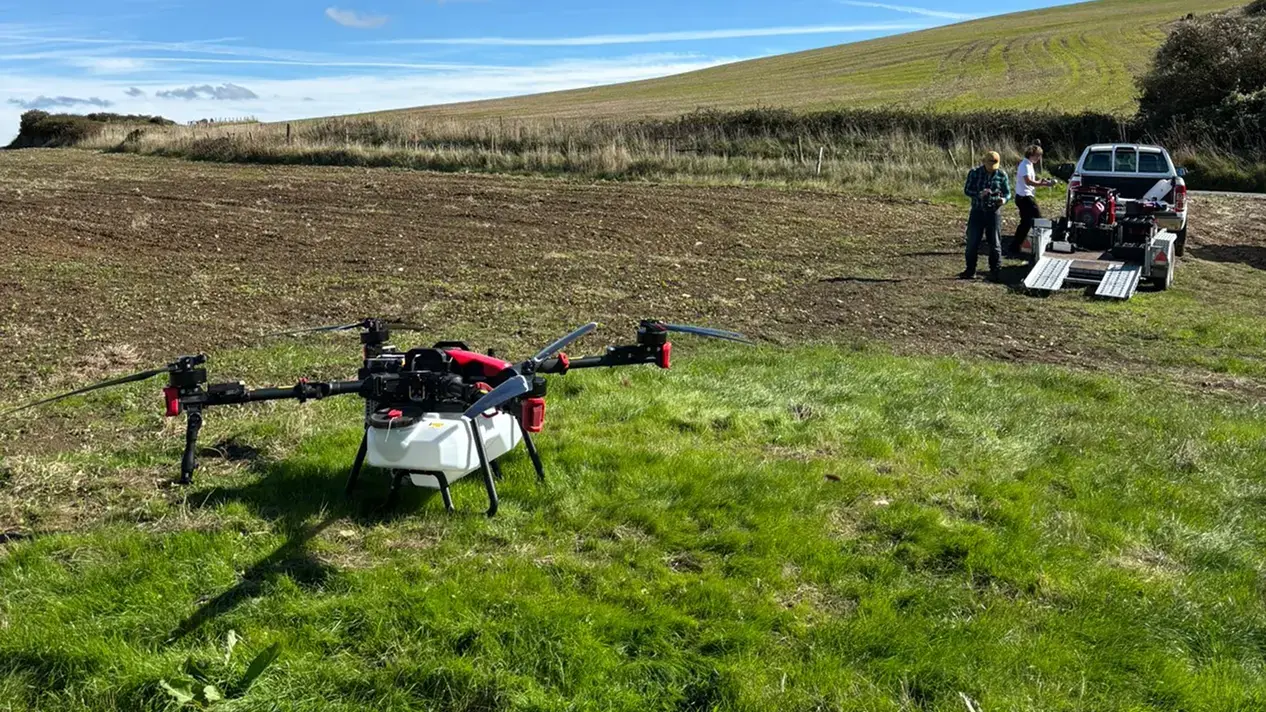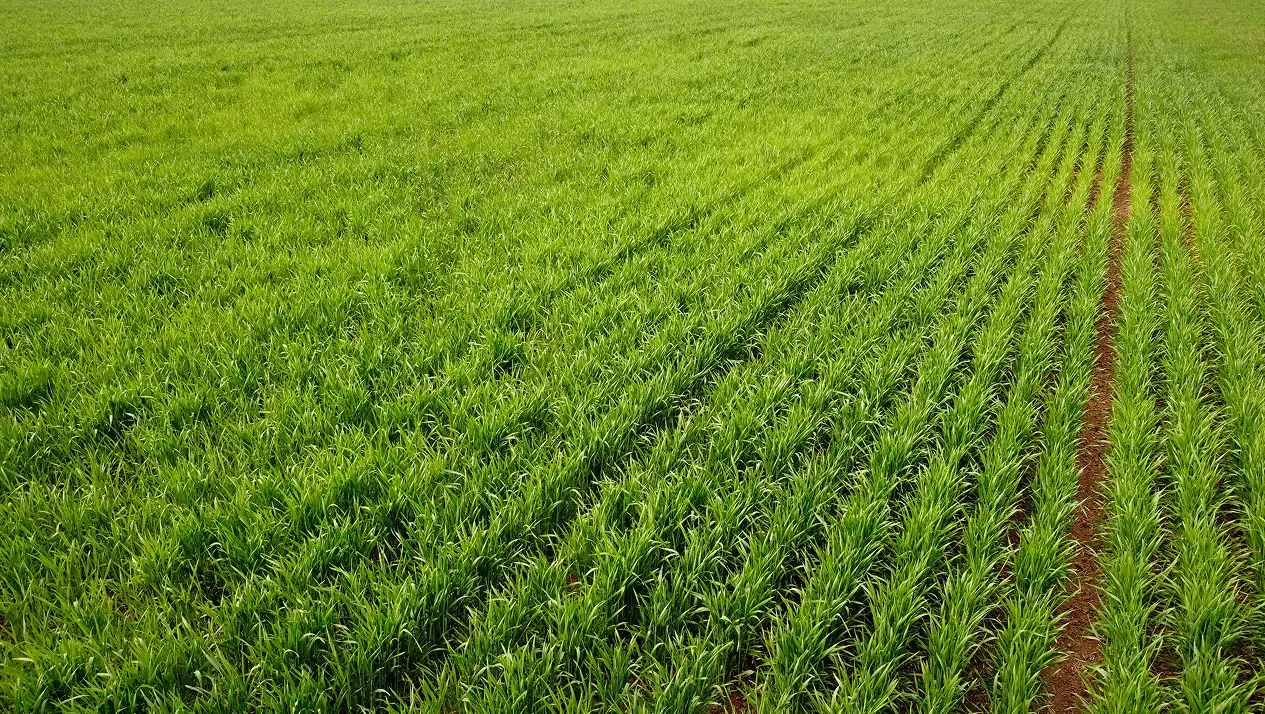
No-till farming - also called zero tillage, direct drilling, or no-till agriculture - is the practice of growing crops without mechanically disturbing the soil. Seeds are drilled directly into undisturbed ground, crop residue is left on the surface, and no ploughing, power harrowing, or cultivation passes take place.
Only 7% of English arable land is currently managed under no-till systems. Given that the science on soil biology recovery has been settled for decades, the SFI payment structure now rewards it generously, and fuel savings alone can justify the switch on a 400-hectare unit - that figure is surprisingly low.
The honest answer is that no-till farming isn't difficult to understand. It's difficult to execute without quietly undoing everything you're trying to achieve. Most guides tell you about the benefits. Very few tell you where the system breaks down in a typical UK autumn - or what actually fixes it. This one does both.
What Is No-Till Farming? (Zero Tillage, Direct Drilling - All the Same Thing)
No-till farming - also called zero tillage farming, zero till, direct drilling, no-till agriculture, zero tillage agriculture, or no-till cultivation - is the practice of growing crops without disturbing the soil through mechanical cultivation. Seeds are drilled directly into undisturbed ground using a tine drill, disc drill, or precision seed drill. Crop residue stays on the surface. No ploughing. No power harrowing. No min-till passes between crops.
In the UK, "direct drilling" and "no-till cropping" are used interchangeably in farming conversations. "Zero till" is the informal shorthand. "Conservation agriculture" is the broader system it sits within - one that typically also includes cover cropping and diverse rotations. In academic and international contexts, "zero tillage agriculture" is the more formal term. They all refer to the same fundamental practice: farming without tilling the soil.
The practice became viable after the Second World War, when herbicide development - paraquat in particular - gave farmers an alternative to the plough for managing weed pressure. Adoption has been led by South America, where no-till agriculture now covers vast areas of the Pampas. The UK has lagged, held back by heavier soils, wetter autumns, and a grass weed problem that the plough traditionally kept manageable.
As of 2020, an estimated 7% of English arable land was under no-till management - low by international comparison, but accelerating. SFI incentives have changed the financial calculation considerably since then.
The Genuine Benefits of Zero Tillage Agriculture - With UK Numbers

The case for no-till farming is well-evidenced. Here's what the research actually shows, without the evangelical oversell.
Soil biology
Ploughing at 20-25cm destroys earthworms, severs fungal networks, and disrupts the mycorrhizal associations responsible for transferring phosphorus and other nutrients to crop roots. Zero tillage agriculture stops that damage and lets the biology rebuild. Research published in peer-reviewed journals confirms that zero-tilled soils contain significantly more soil organic matter than conventionally tilled equivalents, with the most pronounced difference appearing in the top 10cm of the profile - exactly where roots, biology, and water management interact.
Fuel and machinery costs
Harper Adams University data shows a 60% reduction in fuel use for no-till compared to deep tillage, and 47% compared to shallow tillage. On a 400-hectare arable unit, those numbers translate to meaningful annual savings - even before SFI payments enter the picture.
Carbon and greenhouse gas emissions
Net global warming potential is approximately 30% lower under zero-tillage systems compared to conventional tillage. It's worth being honest about this: the improvement builds over time and varies with soil type. This isn't an overnight carbon-sequestration miracle. But the direction of travel is unambiguous.
Water management
Undisturbed soil develops macro-pore channels over time - earthworm burrows, old root pathways - that dramatically improve infiltration rates. In the extreme weather events of 2024 and 2025, farms with healthier, more structured soils demonstrably coped better with both waterlogging and dry spells. The soil is doing more of the water management work that drainage infrastructure previously had to do alone.
Operational flexibility
The ability to direct drill in days rather than weeks - without needing to run multiple cultivation passes first - has opened up genuine windows for SFI income streams that simply weren't achievable under conventional systems.
- ~60% fuel reduction vs. deep tillage (Harper Adams University)
- ~30% lower GHG emissions vs. conventional tillage
- 7% of English arable land currently under no-till (2020 estimate, rising)
- £73/ha/year - SFI SOH1 for no-till commitment
- Up to £349/ha/year - indicative SFI stack for no-till plus cover crop system
SFI 2026 - How No-Till Cropping Unlocks Up to £349/ha in Annual Payments

The Sustainable Farming Incentive has made no-till farming financially compelling in a way it simply wasn't five years ago. Here's how the stack works in practice.
- SOH1 - £73/ha/year. The direct no-till action. A three-year static commitment to establish and maintain crops without tillage. Eligible equipment includes tine drills, disc drills, and precision seed drills. This is the foundation of the SFI no-till stack.
- SOH3 - £163/ha/year. Multi-species summer cover crop, sown between June and August, with a minimum eight-week establishment period. This is where the SFI opportunity gets significant - and where the timing pressure starts.
- CSAM2 - £129/ha/year. Multi-species winter cover crop, established in September and overwintered. Stackable alongside SOH3 in suitable rotations.
- CIPM3 - £55/ha/year. Companion crops - stackable alongside the above actions where the rotation allows.
Sustainable Farming Incentive ROI Calculator
Select a scheme, enter your hectares, and see what a three-year SFI agreement could return.
Scheme Details
Select SFI Action
No-till / direct drilling (3-year commitment)
Agreement term: 3 years
The Claydon family farm in Suffolk - fourth-generation, 255 hectares set aside for SFI management - provides the most credible real-world benchmark available. Stacking operations across a three-year rotation, they generate annual SFI income of approximately £88,995, averaging £349/ha. That figure has appeared in Farmers Weekly and represents what a well-managed no-till system can genuinely achieve through intelligent action stacking.
SFI 2026 Window 1 opens in June 2026, with agreements capped at £100,000 per year.
Now here's the thing most SFI guides skip past. SOH3 requires summer sowing between June and August. CSAM2 requires September establishment. Both of these windows fall in the post-harvest period - when soils may be soft, when autumn drilling is pressing for attention, and when driving any heavy machinery across undisturbed no-till ground does exactly the kind of compaction damage the system was designed to prevent.
That's not a minor operational footnote. It's the central tension in the system - and it's what the next sections address directly.
The Two Hardest Problems in No-Till Farming - And Why Most Guides Leave Them Unsolved
Harper Adams University research identified the two main challenges facing UK no-till systems: crop establishment in wet conditions with crop residues present, and grass weed control - with blackgrass named specifically. These aren't edge cases. They're the reason many farms that try no-till quietly drift back to the plough within three years.
Problem 1 - weed control without the plough
Here's what changes when you stop cultivating: the vertical structure of the weed seed bank changes entirely. In a ploughed system, seeds are buried and stratified at depth - many never germinate. In a no-till system, seeds accumulate in the top 5cm of the soil profile. The germination environment improves. Weed pressure in that surface layer often intensifies, particularly in the early years of conversion.
For blackgrass specifically, this creates a serious problem. Many non-organic UK arable farmers using no-till experience severe blackgrass outbreaks, which frequently force a return to ploughing - precisely the action that resets the soil biology they spent years building. It's the most common reason no-till transitions fail.
The chemistry landscape is improving. Cinmethylin (Luximo, approved in 2022) has added a new pre-emergence mode of action, and bixlozone - sold under the Isoflex active brand and entering UK commercial use in 2025 - represents another new option for the pre-emergence window. But new chemistry only works if it gets applied on time.
This is where things get difficult. Pre-emergence herbicide application typically needs to happen within three to seven days of drilling - before the weed flush begins. In a wet autumn, the same ground conditions that slow the drill down also prevent the sprayer from following it. The window closes. Blackgrass gets in. The programme fails - not because the chemistry was wrong, but because a tractor couldn't access the field.
One further consideration in zero tillage systems: actives like diflufenican persist longer in the soil without cultivation to break them down. In no-till, the rotation and timing of chemistry matters more than in conventional systems, not less. Weed management becomes a more sophisticated programme, not a simpler one.
Problem 2 - cover crop establishment on undisturbed land
Cover crops are the partner technology that makes zero till systems genuinely work. They suppress weeds through canopy competition, feed soil biology through diverse root exudates, protect surface structure from rainfall impact, and - crucially for 2026 - qualify for SOH3 and CSAM2 payments.
The practical problem is this: getting a cover crop established after harvest, on undisturbed land, in the tight post-harvest window, without driving a drill across ground that is often too soft to support it. The drill is a tractor-mounted implement. A tractor on soft, post-harvest ground creates exactly the compaction the system was designed to stop.
Most UK no-till systems silently compromise here. The drill goes on anyway. Compaction accumulates in a new set of wheel ruts. The soil asset erodes, slowly, while the farmer believes they're running a clean zero tillage programme. It's the kind of problem that shows up in a penetrometer reading years later, not the week it happens.
There is a better option - and it involves seeding the cover crop before the combine ever touches the field.
How Drone Spraying Solves No-Till Farming's Core Operational Problems
The logic of zero till agriculture is elegant: stop disturbing the soil, let biology recover, reduce inputs, build carbon, claim SFI payments. The system has an operational weak point - cover crop timing - that conventionally requires heavy machinery. That machinery reintroduces the compaction the system was designed to eliminate. Agricultural drones remove this contradiction.
Drone seeding for cover crops - the SFI window secured without a tractor
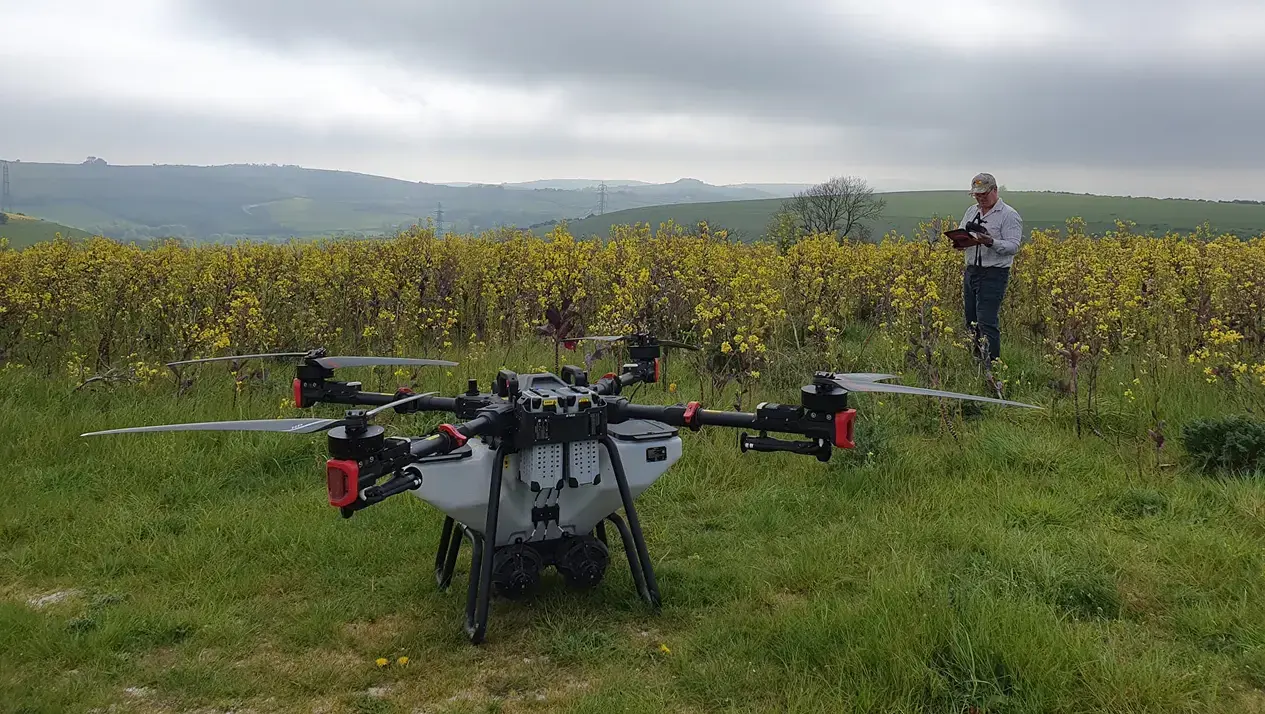
This is the operational development that changes what no-till systems can achieve in practice.
Drone seeding into a standing crop - typically three to four weeks before harvest - solves the SFI timing problem at its root. The cover crop seed is broadcast into the standing winter wheat or barley canopy. It establishes under protection, using the residual soil moisture and light penetrating the canopy. By the time the combine runs, germination is already underway. The SFI SOH3 and CSAM2 windows are secured regardless of what the weather does after harvest.
With an 80-litre granular hopper, a drone can cover approximately 19 hectares per hour seeding cover crops - enough to make even large-scale arable operations achievable in a single day.
Here's a worked example. Lincolnshire farm, 150ha winter wheat rotation. Harvest completes 25 July. Ground too soft for drill until approximately 15 August. SOH3 sowing deadline: end of August (eight-week establishment required). Drone seeding completed 10 July, into standing crop. Cover crop visible at harvest. SFI SOH3 payment secured: £163 x 150ha = £24,450. Tractor passes on undisturbed no-till soil: zero.
Without the drone, that farm faces a genuine choice in a wet July: risk the drill on soft ground, miss the SFI window, or compromise the no-till system it has spent years building. With aerial seeding, that choice doesn't arise.
Foliar and biostimulant applications - precision without compaction
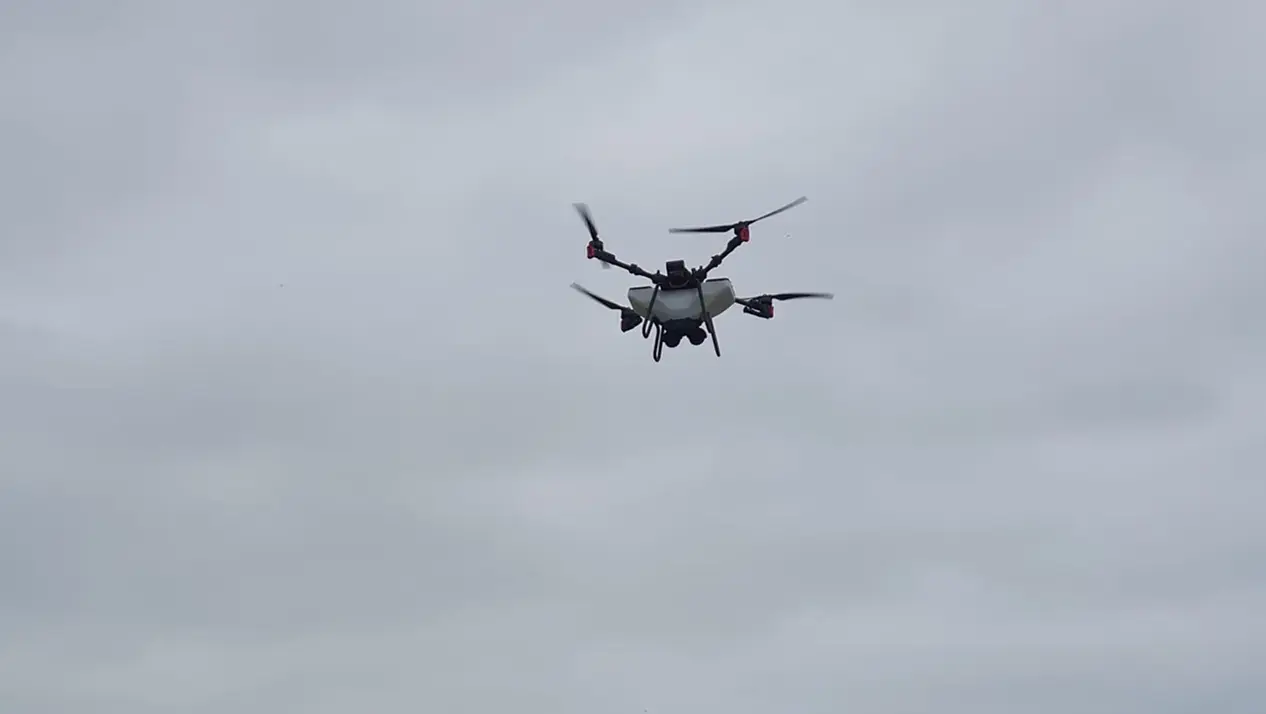
Fungicide programmes, foliar feeds, and biostimulant applications are all deliverable by drone at precise growth stages, without a tractor pass on undisturbed soil mid-season. The full benefit of zero till agriculture is maintained through the entire rotation - not just at establishment, then quietly eroded every time a heavy self-propelled sprayer makes its way across the field.
Wet corners, gateway areas, and headlands - consistently under-treated by conventional sprayers because of boom-length limitations and soft ground - are routinely accessible by drone. In a no-till system where every part of the field is working to rebuild structure and biology, those peripheral areas matter.
Is No-Till Cropping Right for Your Farm? - An Honest Assessment
No-till farming isn't universally suitable, and any guide that suggests otherwise isn't doing you a service.
The system performs best on drier, well-structured, well-drained soils. East Anglia, Lincolnshire, and the Yorkshire Wolds have become the UK strongholds for no-till adoption for exactly this reason - the conditions suit it. On heavy clay, poorly drained ground, or light sands, the picture is considerably more complex. Drainage must be addressed before conversion is attempted; starting no-till on a waterlogged field doesn't fix the waterlogging, it just stops you opening it up.
The transition period is the most underestimated challenge. The first three years of no-till often prove the hardest - soil biology is rebuilding, new pest and weed pressures emerge before the suppressive effects of the system kick in, and nitrogen requirements may temporarily increase as surface residues immobilise N during decomposition. Transitioning to direct drill systems realistically takes up to ten years to reach the soil health outcomes the research describes. Setting expectations honestly at the outset is the difference between a successful transition and an abandoned one.
What no-till is not - and this is worth being direct about - is a low-management system. It demands more sophisticated agronomy, not less. Weed management through chemistry and cover cropping requires a higher level of planning and precision than running a plough through the problem. Farmers who approach it as a cost-cutting shortcut tend to struggle. Those who approach it as an investment in a more resilient, more financially rewarded system tend to get there.
The Compaction Paradox and Other Things That Actually Go Wrong
There's one problem with UK no-till systems that doesn't appear in the academic literature, because it's not a soil science problem. It's an operational one.
The compaction paradox that undermines most UK no-till farms
The goal of farming without tilling is to build soil structure progressively over years. But most no-till farms still run a conventional self-propelled sprayer across the same undisturbed land several times per season. A fully loaded, 36-metre boom sprayer is often the heaviest wheeled vehicle on the farm. Penetrometer readings on established no-till fields routinely show tramline compaction at 10-15cm depth - while the inter-row soil profile shows the structural recovery the system was designed to achieve. The sprayer is quietly reassembling what the drill left intact, season after season, in neat parallel lines across every field.
The irony is complete: the system that removes the plough is still running heavy machinery over the same ground multiple times a year. The soil between the tramlines recovers. The tramlines themselves don't.
Aerial spray applications eliminate all in-field vehicle passes for spraying operations. No new compaction lines. No structural regression in the tracks. The recovery the no-till system was designed to enable can actually happen across the whole field, not just between the wheel marks.
The wet autumn sprint - where zero till systems are most vulnerable
Pre-emergence herbicide application is the single most important intervention in a no-till weed management programme. Apply it correctly - within three to seven days of drilling, before the weed flush - and you build a meaningful chemical barrier against blackgrass. Miss the window, and pressure rebuilds from the first season.
In a wet autumn, the same conditions that slow drilling also prevent the sprayer from accessing the field. Both constraints arrive together. The window closes.
The cover crop timing trap - the most common reason SFI payments are missed
SOH3 requires a multi-species summer cover crop sown between June and August, with eight weeks' establishment before the end of the growing season. In practice, this deadline falls in exactly the same window as post-harvest soft ground, autumn drilling schedules, and the operational pressure of getting the cash crop drilled.
On a no-till farm, driving a drill onto soft post-harvest ground to hit the SFI window is a direct contradiction of the system's core principle. Either you hit the payment date and damage the soil, or you protect the soil and miss the payment.
Drone seeding into the standing crop - three to four weeks before harvest - removes that choice from the equation entirely. The cover is in the ground before the combine takes its first pass. By harvest day, germination has already begun. The SFI window is secured. The soil is untouched.
Frequently Asked Questions - No-Till, Zero Till, and Zero Tillage Agriculture
What is the difference between no-till farming, zero tillage, and direct drilling?
They are synonyms. In UK farming conversations, "direct drilling" is the most commonly used term. "Zero tillage" and "zero tillage agriculture" are more common in academic and international contexts. "No-till" predominates in US usage. Non till farming and farming without tilling are informal variants. All refer to the same practice: establishing crops without mechanical soil disturbance.
Is farming without tilling better for soil health?
Generally yes, but the results depend on soil type, drainage quality, and management standards. The carbon and soil biology benefits are well-evidenced in peer-reviewed research. Weed management requires more active intervention without cultivation, particularly for blackgrass in UK conditions.
What SFI payment is available for no-till farming in 2026?
SOH1 pays £73/ha/year for a minimum three-year no-till commitment. Stacked with SOH3 (£163/ha) and CSAM2 (£129/ha), the total can reach £349/ha/year on suitable rotations. The Claydon farm case study in Suffolk demonstrates this figure is achievable in practice.
How do drones help with no-till farming?
Primarily through cover crop seeding directly into standing crops three to four weeks before harvest, securing SFI timing windows without ground disturbance and with no ground vehicle passes on undisturbed soil.
Is no-till suitable for clay soils in the UK?
More challenging, but not impossible. Drainage must be addressed before conversion is attempted. Heavier soils in wetter western and northern UK regions have seen slower adoption precisely because the drainage and soil structure conditions need to be right before the system can work as designed.
What is non till farming?
An informal variant of the term no-till farming. Non till farming, farming without tilling, no-till agriculture, and zero till are all informal descriptions of the same practice - establishing crops without mechanical cultivation of the soil.
No-till farming - whether you call it zero tillage agriculture, direct drilling, or farming without tilling - is one of the most well-evidenced soil management approaches available to UK arable farmers in 2026. The SFI payment structure makes the financial case stronger than it has ever been. The soil biology science is robust. The operational challenge - managing weeds and establishing cover crops without reintroducing compaction - is real, but it's solvable with the right approach.
The farms that get the most out of no-till systems treat the whole rotation as a precision operation: agronomy, timing, inputs, and soil traffic all managed together. The weak points - the wet autumn pre-emergence window, the post-harvest cover crop race - are predictable. They can be planned for.
Drone Spraying UK works with no-till and regenerative farmers across the UK to deliver aerial cover crop seeding and foliar programmes - entirely from the air, on your schedule, with no tractor wheels on your undisturbed soil.
Whether you're three years into a zero till transition or still working out whether the system suits your land, see our services or get in touch with the team for a no-obligation conversation about how aerial operations could fit into your rotation.